Chapter 1: Entrepreneurial Leadership Foundations

What does it mean to lead? Think about the people you consider leaders. They may be business owners, coaches, teachers, community leaders, team captains, family members or people your own age.
What makes you see them as leaders? Is it their position? The way they speak? The decisions they make? The way people respond to them? Or what they are able to accomplish with others?
Leadership can come with a formal role, but a title alone does not make someone an effective leader. What matters is how a person uses their responsibility, makes decisions, works with others and responds when challenges arise.
“Leadership is the ability to influence direction, take responsibility and help move people, decisions or work toward a goal.”
— The Africentric Arts View
How Leadership Shows up
Leadership is not only about being in charge. It shows up in the choices you make, how you work with others, and how you respond when something needs to be done.
Select each tab to see how leadership shows up in different ways.
-
Being accountable for your actions, decisions and commitments, including what you do when something does not go as planned.
A leader accepts responsibility for the work they take on and understands that their decisions can affect other people and outcomes.
-
Thinking through your options, considering the possible impact and choosing a direction.
Leaders regularly make choices about priorities, people, resources and what should happen next. Strong leadership requires judgment, especially when there is no perfect choice.
-
Using your words, actions and example to encourage people, shape decisions or help move a group toward a goal.
Leadership involves influence. The way you communicate, behave and respond can affect whether people trust you, listen to you and choose to work with you.
-
Seeing what needs to be done and choosing to act instead of always waiting for someone else to tell you.
Leaders recognize when something needs attention and take appropriate action rather than always waiting for someone else to tell them what to do.
Examples

Leadership Is Not Always Obvious. Read the examples below and look for the leadership in each situation.
A student notices that new students at school often eat lunch alone and organizes a way for students to connect.

An employee sees that customers keep asking the same question and suggests a better way to provide the information.

A team captain admits they made the wrong decision during a game and helps the team decide what to do differently next time.
Each person is showing leadership differently.
One identified a need and acted.
One noticed a problem and suggested an improvement
One accepted responsibility and helped others move forward.
Leadership is not one behaviour
It can involve initiative, judgment, accountability, communication, influence and responsibility.
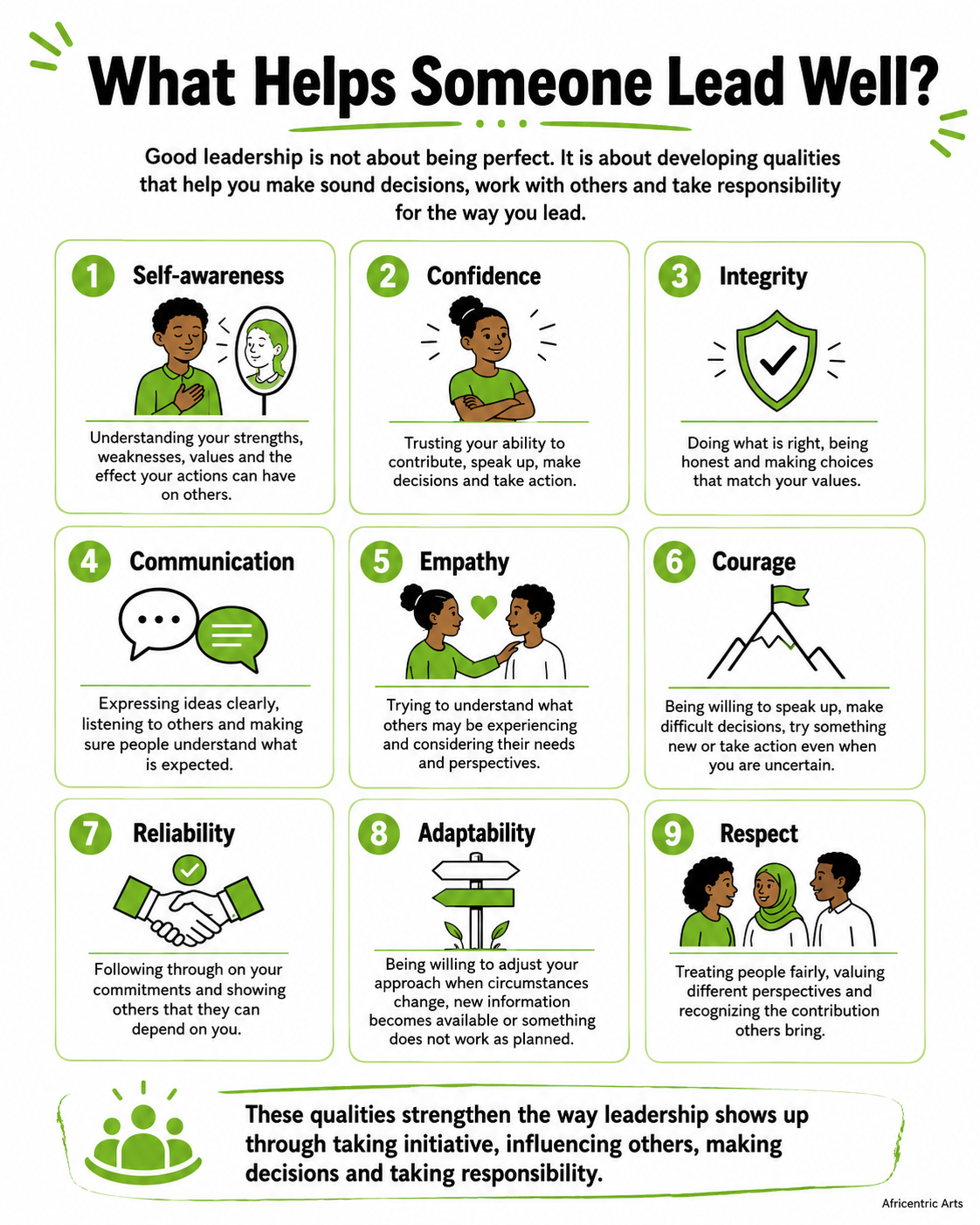
Explore the Qualities of Good Leadership
Knowledge Check