Chapter 3: Problem Discovery

People use the word problem for many things:
“Transportation is a problem.”
“Jobs are a problem.”
“Food prices are a problem.”
“Social media is a problem.”
But these statements are too broad to investigate properly. They tell us the topic. They do not yet tell us what is going wrong.
Issue Versus Problem?
Issue
Broad topic or concern that may contain several different problems.
Examples:
Youth employment
Transportation
Food access
Mental wellness
Problem
Specific situation that prevents something from working as it should
Example:
Some teenagers struggle to get their first job because employers ask for previous work experience.
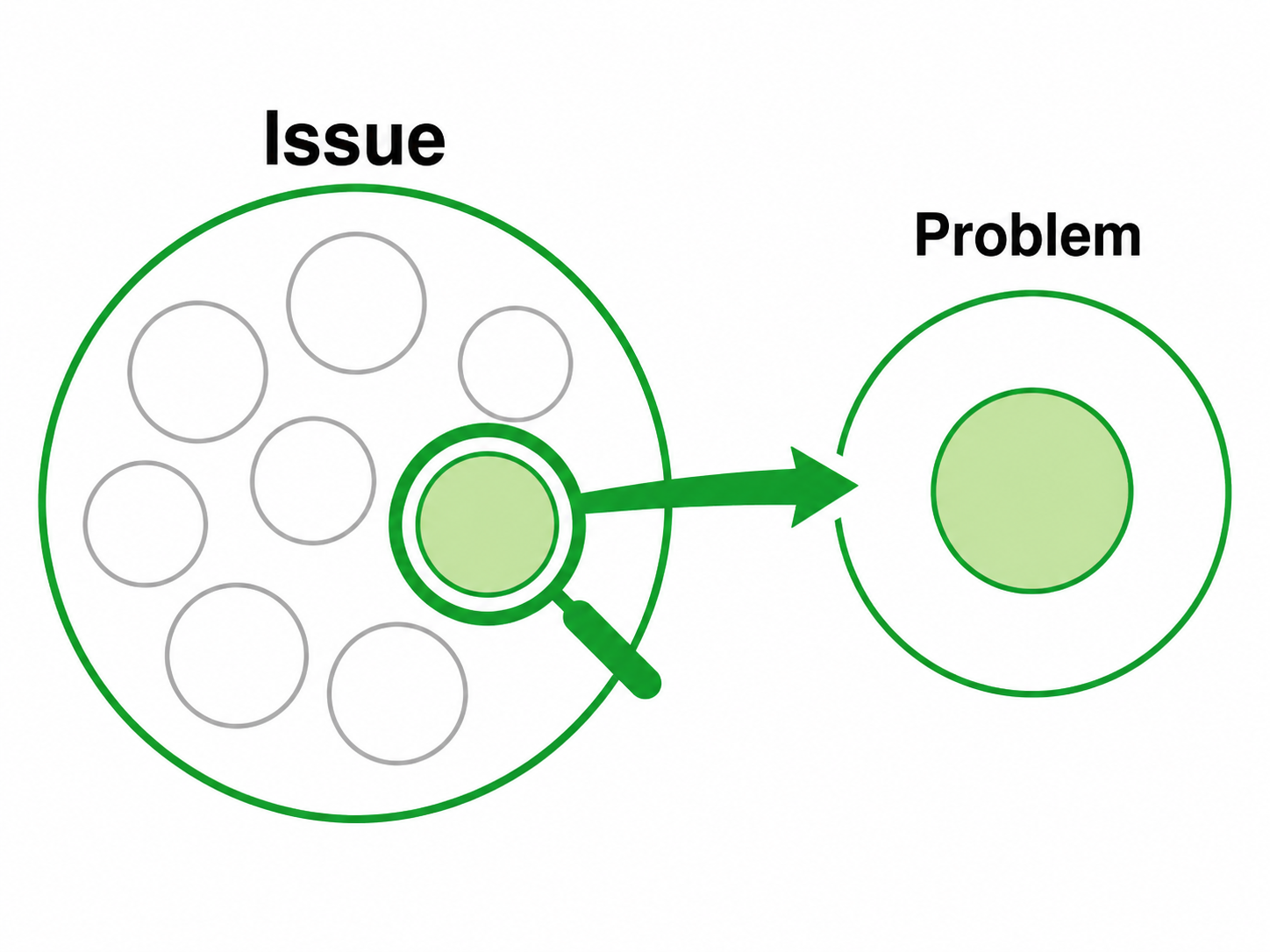
An issue is the bigger area of concern and may include many different problems. A problem is the specific difficulty within that issue.
Issue (too broad):
Food allergies
Problem (clearer):
Some students cannot find food at school that is clearly labelled and safe for their allergies.
Issue (too broad):
Transportation
Problem (clearer):
Some teenagers cannot attend evening community programs because they do not have reliable transportation.
Issue (too broad):
First jobs
Problem (clearer):
Some teenagers struggle to get their first job because many entry-level employers still ask for previous experience.
How Can a Problem Show Up?
Problems do not all look the same. Sometimes the signal is:
-
Students spend a long time waiting for transportation after school.
-
A young person wants to join a sport but cannot afford the registration fee or equipment.
-
A family struggles to find affordable food that meets its dietary needs.
-
Important instructions on a website are difficult to understand.
-
An online registration form repeatedly prevents users from finishing registration.
-
Some students do not have access to the same opportunities as others.
-
An activity cannot be accessed by someone with a disability.
-
A simple process requires too many steps, too much time or unnecessary effort.
These are signals. A signal tells you where to look. It does not automatically tell you the full problem.
Problem, Symptom or Cause?
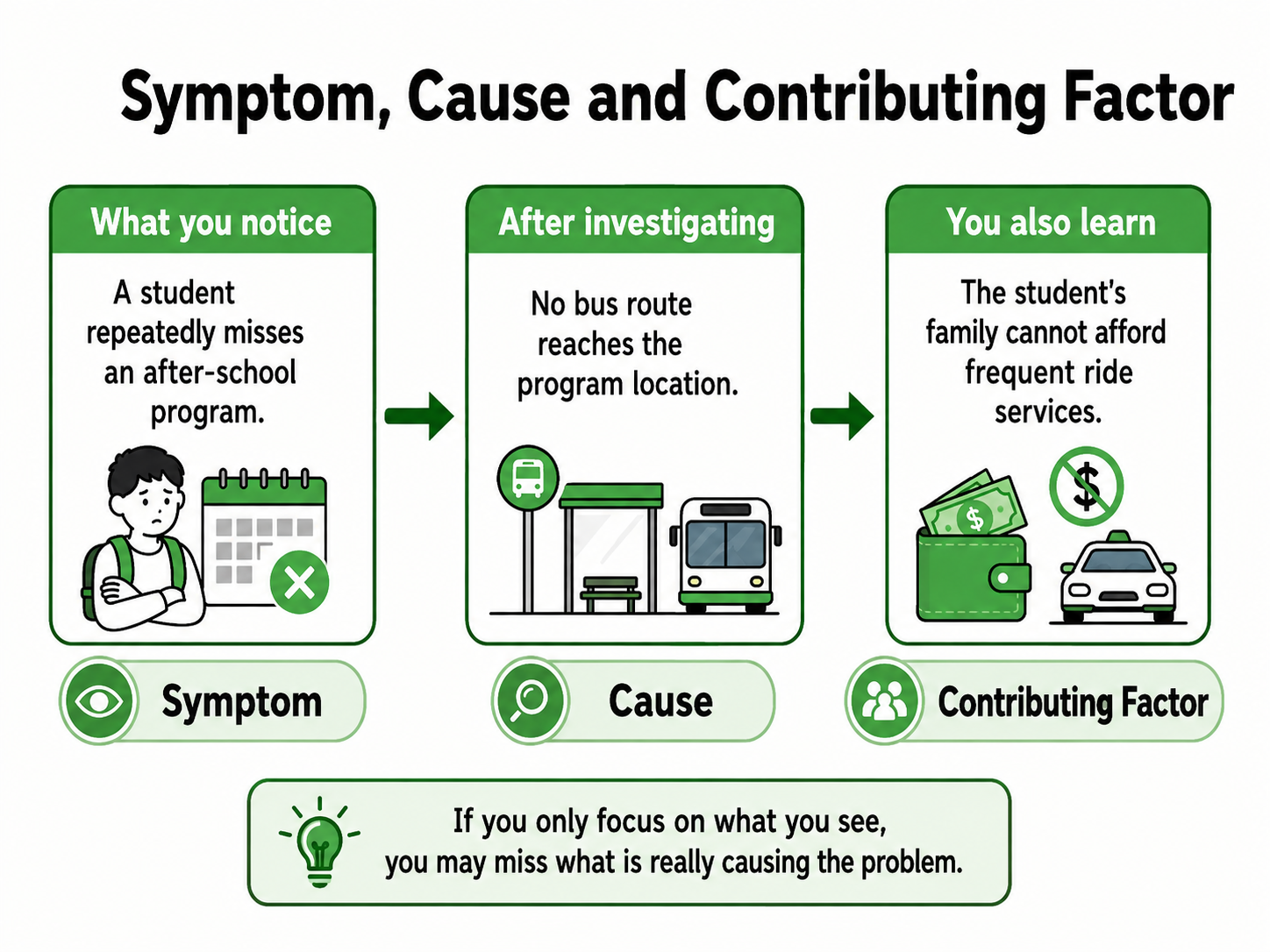
A problem is not always the first thing you notice. Sometimes what you see is only a sign that a deeper problem exists. For example, a student keeps arriving late. The lateness is easy to see, but it may not be the real problem. The real problem could be unreliable transportation, a work schedule that conflicts with school, or something else entirely. This is why problem discovery requires you to look beyond what is happening on the surface. You need to ask:
What am I seeing?
What may be causing it?
What is making it continue or get worse?
“Something you can see happening.”
“Helps create the problem.”
“Make the problem worse or allow it to continue.”
Understanding the difference between a symptom, cause and contributing factor helps you avoid treating the visible effect as if it were the whole problem.
EXAMPLES
A student repeatedly misses an after-school program.
Knowledge Check